



Top 10 Dark Web Search Engines: Enhance Your CTEM Discovery Strategy
Dark web search engines give security teams a way to surface threats that never reach Google: leaked credentials, stealer logs, and active cybercrime chatter. This guide compares the top ten, shows where each fits in CTEM discovery and validation, and explains why automation is essential for keeping pace with fast-moving exposure.

Updated July 14, 2026
The dark web contains critical threat intelligence that traditional search engines can't access. Within Continuous Threat Exposure Management (CTEM), this layer becomes especially important during the Discovery and Validation phases, where security teams need visibility into real attacker activity rather than theoretical exploits of known vulnerabilities.
Cybercriminals actively plan attacks, trade credentials, and share exploit tools across hidden forums and marketplaces, making specialized search engines essential for tracking exposures that sit outside the traditional attack surface.
For security teams focused on proactive exposure management, the quality of dark web intelligence directly impacts how effectively they can identify, validate, and prioritize real threats before they're exploited.
In this blog, we explore how dark web search engines differ from surface web counterparts, the features that define reliable platforms in a CTEM context, and the key tools security teams use to gather intelligence from hidden environments.
» Skip to the solution: Try KELA Cyber for free
Overview of Dark Web Search Engines
Modern dark web search engines aren’t just gateways to hidden sites anymore. In 2026, they act as intelligence sources that plug directly into CTEM Discovery, feeding real-time threat data into your security workflows through API integrations.
These platforms focus on uncovering pre-attack artifacts that traditional External Attack Surface Management (EASM) tools often miss, including leaked session tokens, stealer logs, and discussions in private forums. Tools like DarkSearch (no longer public facing) and Flare continuously crawl v3 onion services and illicit Telegram channels, creating a searchable layer of otherwise inaccessible intelligence.
Key Capabilities in CTEM Discovery
- You can identify unknown exposures earlier, including leaked developer credentials and overlooked access points.
- You gain visibility into supply chain discussions that may indicate indirect risk through third parties.
- You can detect malware-as-a-service (MaaS) offerings tailored to your specific technology stack.
- You move beyond mapping visible assets and start understanding attacker intent and preparation.
- You improve how you detect and prioritize real threats at the earliest stage of the CTEM lifecycle.
Dark Web Search Engines vs. Surface Web Search Engines
Unlike surface web search engines like Google or Bing, dark web search engines operate in environments built for anonymity and resistance to indexing. In a CTEM program, these differences directly affect how exposures are discovered, validated, and prioritized.
Aspect | Surface Web Search Engine | Dark Web Search Engine |
|---|---|---|
Crawling method | Automated bots systematically crawl and follow links across indexed websites | Manual discovery and specialized crawlers access .onion sites through Tor network |
Indexing approach | Comprehensive indexing with algorithms ranking billions of pages | Limited indexing due to intentionally hidden and unindexed content |
Content accessibility | Publicly available content accessible through standard browsers | Requires Tor browser or specialized tools to access hidden services |
Search scope | Massive scale covering billions of indexed pages | Significantly smaller index focused on onion sites and hidden services |
Update frequency | Continuous real-time updates across the indexed web | Slower updates due to technical limitations and access restrictions |
Result ranking | Complex algorithms based on relevance, authority, and user behavior | Basic ranking often prioritizing recency or manual curation |
Content filtering | Automated filtering with some manual review for policy violations | Varies widely from strict content filtering to completely unfiltered results |
» Find out if darknet markets are going out of business, and what will happen next
Features That Strengthen CTEM Discovery with Dark Web Search Engines
When used within a CTEM program, dark web search engines are evaluated based on how effectively they support continuous discovery, validation, and prioritization of real-world threats.
- Index size and coverage: Strong coverage across onion sites, forums, marketplaces, and Telegram channels increases your chances of uncovering unknown assets and exposures. In a CTEM context, this directly improves the discovery phase by revealing parts of your external attack surface that traditional tools miss.
- Data freshness and update frequency: Threat data becomes outdated quickly, especially when dealing with leaked credentials or active access sales. Engines that continuously ingest and refresh data help you track live threats, ensuring your CTEM process is based on what attackers are currently using, not what was relevant weeks ago.
- Uptime and reliability: CTEM relies on continuous monitoring rather than one-off assessments. If your intelligence source is unavailable during critical moments, you lose visibility into potential threats. Reliable platforms ensure consistent data flow into your CTEM lifecycle without interruption.
- Filtering and relevance capabilities: Large volumes of dark web data can easily overwhelm analysts. Advanced filtering allows you to narrow results to assets, domains, or credentials linked to your organization, making validation more efficient by focusing only on meaningful signals.
- API access and integration: Direct integration into SIEMs and threat intelligence platforms enables automated data flow into CTEM processes, reducing manual effort in discovery and validation.
- Scoring and prioritization: Not all findings carry the same level of risk. Scoring systems help map dark web activity to real-world impact, supporting CTEM Prioritization by highlighting which exposures are actively being exploited or traded.
- Source reputation and validation: Dark web data can be unreliable or misleading. Engines that assess source credibility help reduce false positives, ensuring that what enters your CTEM validation phase is accurate and worth acting on.
» Discover why you need cyber threat intelligence for your organization

Dark Web Threat Insights
Strengthen your defenses with KELA’s threat intelligence platform that monitors dark web markets and uncovers threats before they strike.
Top 10 Dark Web Search Engines to Enhance Your CTEM Discovery Strategy
1

Brief overview
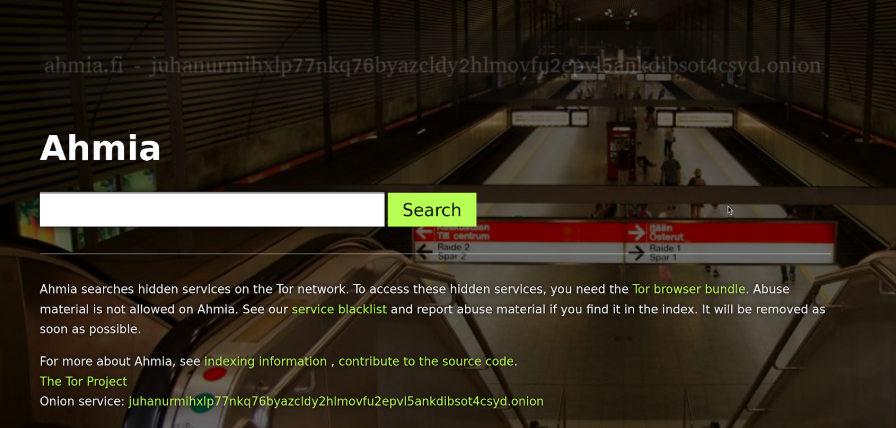
Ahmia stands out through robust content filtering systems that exclude illegal materials and harmful sites from search results. Since receiving Tor Project support in 2014, Ahmia has maintained dual access points through both clearnet and onion interfaces.
Its open-source codebase allows security teams to analyze underlying code and contribute to platform development.
Crawl focus
Public-facing onion services and legitimate privacy projects. It is the best tool for discovering "branded" onion sites or official portals for privacy-focused organizations that might be impersonated by phishers.
Pros and limitations
Content filtering reduces legal and ethical risks
Open-source platform enables transparency and customization
Dual access through clearnet and onion interfaces
Strict content filtering limits index comprehensiveness
May exclude relevant threat intelligence on filtered sites
Smaller index compared to unfiltered alternatives
2


Brief overview
DuckDuckGo's Tor offering is built on the privacy infrastructure of its surface-web engine, giving a familiar, less jarring interface for analysts moving between surface and dark web research.
The platform's promise of no tracking of search history or personalizing of search results fits the bill perfectly for the anonymity requirements of the dark web.
Crawl focus
Private clearnet search over Tor. Rather than indexing .onion services, it lets analysts run anonymous surface-web research (market mentions, news, technical references) without exposing their IP, which is why it pairs with a true onion index rather than replacing one.
Pros and limitations
Easy to use for basic surface-level searches
Offers more privacy than mainstream search engines
Accessible without special configuration
No .onion indexing
No advanced filtering or onion-specific tools
Misses significant threat intelligence content
3


Brief overview
Torch is one of the oldest dark web search engines, consistently active while many competitors have disappeared. It boasts a vast index of onion sites, delivering results almost instantly.
Its interface is minimal, emphasizing raw functionality over appearance. Torch’s open indexing approach ensures users can access both mainstream and obscure corners of the dark web.
Crawl focus
Historical and unfiltered data. Torch's lack of strict filtering makes it a goldmine for finding "dead" but archived forum threads and historical leak announcements that other engines might have scrubbed or missed.
Pros and limitations
Offers one of the largest and most consistent dark web indexes
Results load quickly, allowing fast navigation between sites
Simple interface makes searches straightforward and distraction-free
Provides no content filtering or protection from harmful sites
Illegal or malicious content may appear in search results
Beginners may find it difficult to distinguish safe from unsafe links
4

Brief overview
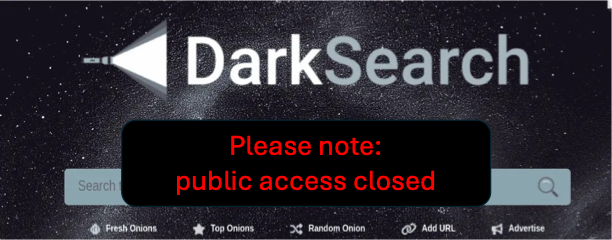
DarkSearch was one of the first engines to treat the dark web as a structured data problem rather than a manual browsing exercise. It crawled and cached onion pages, supported refined dork-style queries, and exposed results through both a web interface and a free, rate-limited API. That API is what earned its following: analysts could script repeatable dark web queries and feed results into their own tooling instead of clicking through Tor by hand. Public access has since closed, which is why it sits on this list as a cautionary entry rather than a recommendation.
Why it's no longer live
The operators ended open public access and now direct organisations to a commercial OSINT platform (Owlint) instead. The free interface and public API that made DarkSearch useful are gone; the project's own site confirms public access has ended. Its index also struggled with freshness while it ran, with many queries returning links to onion pages that had already gone dark. It is a clean reminder that even well-built dark web tools decay quickly without continuous upkeep.
Pros and limitations
Free API enabled scripted, repeatable dark web queries
Dork-style operators (AND, OR, NOT) allowed precise filtering
Lowered the barrier to dark web OSINT without manual Tor browsing
Public access and the free API are now closed
Index freshness was a persistent weakness; results often pointed to dead pages
A clear example of how fast standalone dark web tools appear and disappear
5

Brief overview
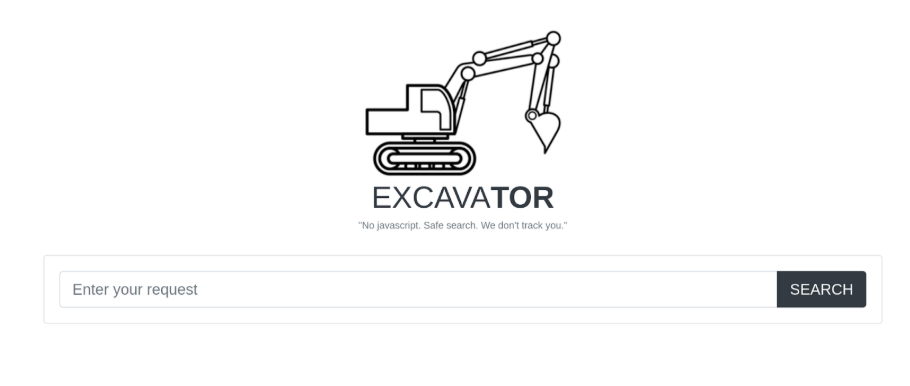
Excavator is perhaps as controversial as it gets, among the most comprehensive search engines on the dark network. Built in 2019 by anonymous activists, Excavator would be an extremely deep digger into the onion content, trying to be open for everything.
It operates under maximum anonymity and simplicity, avoiding JavaScript entirely on the premise that they might improve overall security and lower risks of browser fingerprinting.
Crawl focus
Anonymized marketplace listings. Excavator is highly effective at crawling high-value marketplaces (like TorZon or Russian Market) for specific keywords without triggering the anti-bot protections common on larger engines.
Pros and limitations
Provides full, unrestricted access to onion sites
No JavaScript means better privacy and fewer risks
Lightweight and fast when handling large searches
High exposure to illegal or harmful content
No filtering or content warnings at all
Not suitable for compliance-focused organizations.
6


Brief overview
Tor66 blends a traditional search engine with a categorized directory of onion sites. Instead of relying on random listings, it verifies and organizes links, making navigation cleaner and safer. The layout focuses on giving users working, legitimate results, even if that means having a smaller index compared to broader engines.
Crawl focus
New and emerging onions. Because it indexes based on the most recent "last seen" timestamps, it is the best tool for finding "pop-up" phishing sites or temporary file-hosting onions used for a single data dump.
Pros and limitations
Verified links reduce the chance of fake or dead sites
Organized by category for easier browsing
More structured and user-friendly than most dark web engines
Updates slowly and may miss emerging threats
Relies on community verification for accuracy
Smaller coverage than automated crawlers
7


Brief overview
DeepSearch is an open-source search engine for serious ventures into the Tor network's onion space. The very nature of the search engine endorses accuracy over quantity; its results are therefore hyper accurate and less inundated with the spam links commonly found on dark web search engines.
It provides a more refined search experience for the users by focusing and upholding quality over quantity, but this may compromise the accuracy of its search results on an omnipresent scale.
Crawl focus
Unfiltered forums and discussions. DeepSearch excels at unearthing niche, low-traffic discussion boards where advanced persistent threats (APTs) might discuss TTPs in less-monitored environments.
Pros and limitations
Delivers high-quality, relevant search results
Open-source and customizable for research
Transparent in how it gathers and ranks data
Smaller index than major engines
May overlook newly launched onion sites
Limited for large-scale threat discovery
8


Brief overview
Fresh Onions constantly crawls the dark web to discover and map new onion services as they appear. It doesn’t just find pages — it gathers technical data such as uptime, bitcoin addresses, SSH keys, and service fingerprints.
This makes it a powerful tool for tracking infrastructure or investigating network relationships between hidden services. The open-source setup also allows analysts to adapt it for their own research systems.
Crawl focus
Technical metadata and identifiers. It is the premier tool for discovering cross-linked assets and for finding different onion sites that share the same Bitcoin wallet, SSH key, or server fingerprints.
Pros and limitations
Detects new onion services in real time.
Provides detailed technical and metadata information
Fully open-source and customizable
Requires technical knowledge to use effectively
Needs ongoing maintenance to stay current
Can produce more data than smaller teams can handle
9

Brief overview
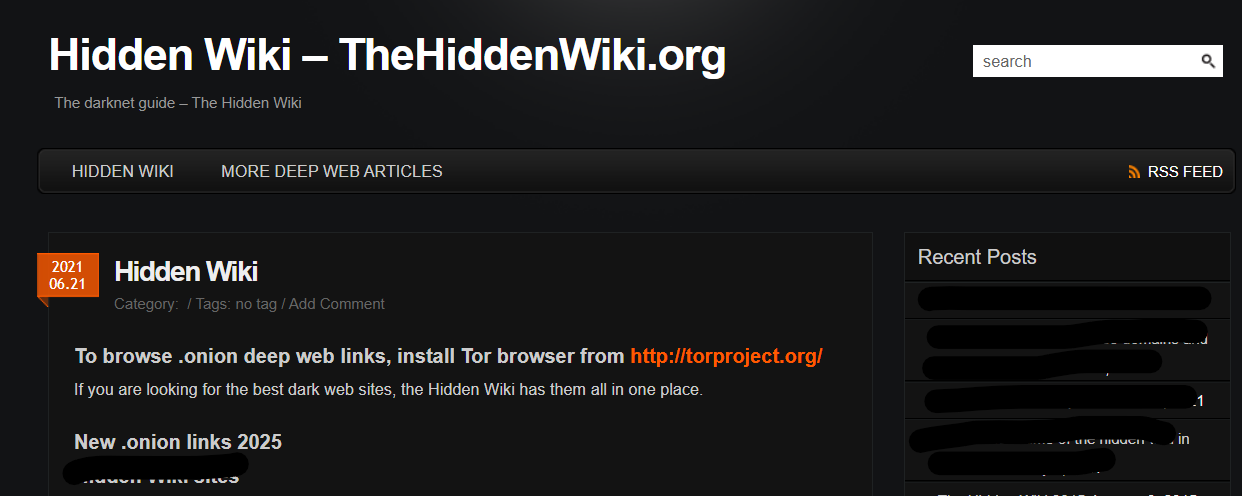
Hidden Wiki is a curated directory rather than a search engine, used as a starting index for dark web resources. In 2026, the most-maintained version lists around 5,000 links and runs automated availability checks to cut dead entries. Reliability varies between versions, so links still need manual validation before use.
From a CTEM perspective, it supports early-stage Discovery by helping security teams identify currently active underground platforms where credential sales, data dumps, and exploit discussions take place. This helps map potential exposure paths linked to organizational assets.
Crawl focus
Focuses on verified marketplaces, forums, and curated directories. It is primarily used to identify stable entry points into underground ecosystems and locate active URLs for high-traffic cybercrime platforms where leaked credentials and breach data are commonly traded.
Pros and limitations
Provides structured access to active dark web marketplaces and forums
Helps locate verified and currently live onion sites
Useful for identifying potential sources of credential exposure
No advanced search or intelligence ranking capabilities
Link reliability can still vary despite automated checks
Requires manual validation to confirm relevance and accuracy
10

Brief overview
DarkWebLinks functions as a specialized status and listing engine that monitors the availability of cybercrime infrastructure across the dark web, providing up/down status for marketplaces, forums, and illicit services. It is particularly effective at detecting when major cybercrime platforms shift domains, exit, or relaunch under new onion addresses.
Within a CTEM context, it supports continuous Discovery and early Prioritization by highlighting infrastructure movement that often signals data sales, breaches, or Initial Access Broker activity.
Crawl focus
Focuses on marketplace continuity and infrastructure monitoring. It tracks uptime, shutdowns, and migration patterns of cybercrime platforms, helping identify when markets exit or relaunch under new onion addresses, often indicating active data trading or exposure events.
Pros and limitations
Real-time tracking of marketplace and forum availability
Strong visibility into cybercrime infrastructure movement
Early indicator of data leaks or breach-related activity
Limited depth of intelligence beyond status tracking
No contextual analysis of threats or exposure severity
Requires correlation with other CTI sources for validation
DarkSearch is the one entry here that no longer works, and that is the point: dark web tooling churns as fast as the marketplaces it indexes, which is why durable visibility depends on continuous, automated collection rather than any single search engine.
» Learn more: The role of a threat intelligence analyst
Automating Dark Web Exposure Management: Why Manual Discovery Falls Short
The scale and volatility of the dark web make manual searching insufficient for enterprise security operations. Malicious onion sites typically have very short lifespans — flash-leak and credential dump platforms often disappear or shift domains within hours, sometimes less than 48. This rapid turnover means manual investigation through Tor browsers only captures a small fraction of available intelligence, often missing private forums, invitation-only marketplaces, and encrypted messaging channels where high-value data is exchanged.
Automated discovery addresses this limitation by using continuous, distributed crawlers and AI-powered monitoring systems that operate 24/7 across onion services, forums, and chat platforms. Instead of relying on point-in-time searches, automation enables continuous exposure detection across thousands of sources, capturing leaked credentials, stealer logs, and marketplace activity before it is removed or relocated.
» Learn more about how hackers gain entry to your systems
How KELA Cyber Supports CTEM-Powered Threat Intelligence
While dark web search engines can provide useful entry points for threat intelligence gathering, they still depend heavily on manual analysis, validation, and interpretation before data becomes actionable. Within a CTEM approach, this creates friction between discovery and decision-making, especially when speed and accuracy matter.
KELA Cyber helps bridge this gap by delivering real-time, contextualized intelligence from cybercrime environments that focuses specifically on threats targeting your organization. The platform accesses hard-to-reach cybercrime sources and applies human-led intelligence analysis to reflect an attacker’s view of your exposure. This supports a more continuous CTEM cycle where exposures are not only identified, but also understood in context and acted on before they are exploited.
» Ready to get started? Contact us to learn more about our cyber threat intelligence services
FAQs
How do dark web search engines support CTEM programs?
Dark web search engines support CTEM by improving the Discovery and Validation phases. They help security teams identify exposed credentials, leaked data, and active threat discussions that are not visible through traditional search tools.
This allows organizations to focus on real attacker activity rather than theoretical vulnerabilities.
Why is CTEM important when analyzing dark web intelligence?
CTEM provides a structured way to move from raw intelligence to actionable risk reduction. Instead of treating all findings equally, CTEM helps security teams prioritize exposures based on exploitability, attacker interest, and business impact, improving response efficiency.
Why can’t manual dark web searching be relied on?
Manual searching is limited by the short lifespan of dark web content, which often exists for less than 48 hours before being removed or moved. It also cannot scale across thousands of forums, marketplaces, and private channels, leading to missed exposures and incomplete visibility.
How does automation improve dark web threat discovery?
Automation enables continuous monitoring of dark web environments using crawlers, AI models, and real-time data ingestion. This ensures faster detection of leaked credentials, stealer logs, and marketplace activity before they disappear or shift locations.
What is a dark web search engine?
A dark web search engine indexes content hosted on the Tor network's .onion services, which standard engines like Google and Bing cannot reach. Security teams use them to find leaked credentials, stealer logs, and cybercrime chatter that sit outside the indexed surface web.
How are dark web search engines different from Google or Bing?
Surface engines crawl linked, indexed pages at massive scale with relevance ranking. Dark web engines work inside Tor against a smaller, intentionally hidden set of services, with slower updates, lighter ranking, and filtering that ranges from strict to none.
Are dark web search engines safe to use?
The engines themselves are legal to use in most jurisdictions, but results can include malicious, fraudulent, or illegal content. Analysts should work from an isolated environment and treat every result as untrusted until validated.
Where do dark web search engines fit in CTEM?
They are primarily a Discovery and Validation tool, surfacing exposures like leaked credentials and access sales early in the CTEM lifecycle. Their value depends on index freshness and coverage, which is why they are paired with continuous monitoring rather than used alone.
Why isn't a dark web search engine enough on its own?
Onion services appear and disappear within hours, and the highest-value data often sits in private forums and channels these engines never index. Durable visibility comes from continuous, automated collection rather than point-in-time manual searches.