Top 10 Telegram Log & Carding Channels: A CTEM Defense Strategy
Major Telegram channels are fueling data theft and carding schemes. KELA helps your business track these threats and take action before they escalate.


Updated July 13, 2026
Over the past few months, telegram channels have been actively trading stolen data, compromised accounts, and carding-related intelligence. These channels range from long-established groups with millions of published accounts to newer actors quickly gaining traction. Each operates differently, with unique targets, techniques, and subscription models that cater to cybercriminals looking for fresh logs, compromised information, or fraudulent cash-out methods.
In this blog, we will explore some of the most recent and active log-selling and carding channels, highlighting what makes them stand out, their scale of activity, and why they matter in today’s threat landscape.
» Get started for free with KELA and strengthen your cybersecurity
Telegram as a Modern Discovery Model
Telegram has become the first point where exposed organizational data appears in a usable, public format. Instead of waiting for leaks to be indexed or sold on marketplaces, exposures are pushed instantly through channels, bots, and automated pipelines.
- Telegram removes traditional access barriers, allowing threat actors to distribute credential dumps to tens of thousands of subscribers within minutes rather than days.
- Automated bots continuously ingest and publish stealer logs, meaning exposed credentials surface in real time instead of going through manual marketplace listings.
- Sensitive data such as session cookies and MFA-bypass tokens is shared alongside passwords, increasing the likelihood of immediate misuse.
- Threat actors coordinate directly on Telegram, sharing verified access points like VPN and RDP entry paths without needing intermediaries.
» Understand how threat actors breach and exploit your data
Time to Exposure: From Delayed to Immediate
The shift from Tor-based forums to Telegram has reduced the time to exposure from days to minutes. Previously, credential leaks required marketplace uploads, vetting, and buyer negotiation. Now, distribution is automated and instant.
Infostealer families such as LummaC2 and RedLine now exfiltrate data directly to Telegram command-and-control channels, bypassing the traditional listing phase entirely. This removes delays and allows attackers to act on fresh credentials almost immediately after compromise.
» Here's everything you need to know about infostealers
Traditional Exposure vs. Automated Log Clouds
Automated “log clouds” are often populated and distributed through channels on Telegram, changing how attackers identify and exploit access. Instead of scanning for vulnerabilities, they search for valid identities and active sessions in real time.
Aspect | Traditional Vulnerability Management | Automated Log Clouds |
|---|---|---|
Focus | Software flaws and patching | Identity and credential exposure |
Discovery Method | Network scanning and asset enumeration | Searchable stealer log databases fed by Telegram channels and bots |
Time to Access | Delayed (scan → exploit → access) | Immediate if credentials exist |
Dependency | Requires unpatched systems | Works even on fully patched systems |
Data Type | CVEs, misconfigurations | Passwords, cookies, session tokens |
» Discover how Telegram Clouds of Logs are the fastest gateway to your network
Impact & Corporate Risk in Telegram-Powered Threats
Telegram has become a key enabler in modern cybercrime ecosystems, accelerating identity-based attacks, ransomware access markets, phishing industrialization, and cascading supply chain exposure across organizations.
Credential Stuffing & Identity Hijacking
Credential stuffing allows attackers to use valid logins to bypass perimeter defenses and remain undetected inside systems. In 2025, stolen credentials accounted for 22% of all breaches. Identity-based incidents also took 292 days to detect on average, giving attackers extended time to move laterally and extract data, with an average breach cost of $4.81 million.
Initial Access Brokerage for Ransomware
Telegram channels support a ransomware supply chain where Initial Access Brokers sell pre-compromised access such as VPN, RDP, and Okta sessions. This removes reconnaissance effort and speeds up deployment. Automated validation tools, including Active Directory checks via bots, further reduce the time between initial access and encryption.
Brand Impersonation & Phishing-as-a-Service (PhaaS)
AI-powered phishing kits have industrialized fraud, lowering the barrier for cybercriminals to launch sophisticated campaigns. These kits enable adaptive, polymorphic attacks that continuously change to evade detection. Adversary-in-the-Middle (AiTM) methods can bypass MFA protections, while AI-generated lures make phishing attempts more convincing and harder to identify, increasing the likelihood of user interaction.
Supply Chain & Third-Party Exposure
Telegram-based data markets increase third-party risk by spreading compromise across connected organizations. Attackers increasingly target shared vendors and service providers rather than single entities, allowing a single breach to cascade across multiple environments and impact a wider network of organizations.
» Find out why your organization needs cyber threat intelligence

Advanced Cyber Threat Intelligence
KELA’s cyber threat intelligence platform helps you and your business identify risks in real time and act before damage occurs.
Top 10 Telegram Log & Carding Channels: A CTEM Defense Strategy
Telegram has become a central distribution layer for stolen credentials, session tokens, and financial data, enabling attackers to move from data exposure to exploitation within minutes. These log and carding channels are not isolated threats; they form a connected ecosystem that supports credential stuffing, account takeover, and large-scale fraud operations.
1


Moon Cloud
Brief overview
Moon Cloud is a high-volume credential and session data aggregator targeting global retail users and corporate employees. Its scope focuses on harvesting Telegram session data (tdata), browser cookies, and valid corporate logins using infostealers like LummaC2 and RedLine distributed through cracked software, SEO poisoning, and malicious downloads.
The intent is identity compromise, enabling attackers to bypass authentication and gain immediate access through stolen session tokens instead of passwords.
Monetization model
Moon Cloud operates on a freemium-to-subscription model. It distributes 100+ low-quality or “dead” samples daily to build trust and drive upgrades to a $250/month VIP tier. The primary value driver is access to “zero-hour” fresh logs, which are marketed as highly time-sensitive and operationally valuable.
Mitigation strategy
- Deploy Identity Threat Detection and Response (ITDR) across all identities
- Monitor for impossible travel and abnormal geolocation sign-ins
- Detect session token reuse from unmanaged or non-corporate IPs
- Continuously validate active sessions instead of relying on login-time checks
- Enforce conditional access policies tied to device compliance and risk signals
2

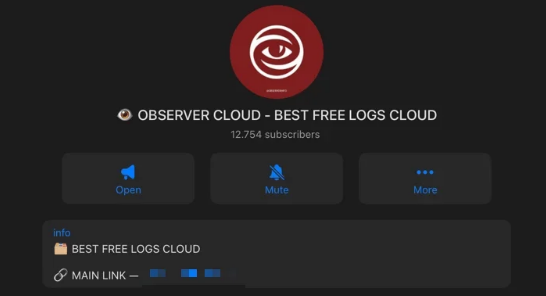
Observer Cloud
Brief overview
Observer Cloud presents itself as an educational scam-monitoring platform but operates as a credential stuffing distribution hub. Its scope targets financial services and enterprise environments by distributing “UCL” (user:pass lists) collected via Stealc and Vidar malware.
These credentials are often embedded in fake tutorials or tool guides on social platforms. The intent is large-scale credential stuffing using reused passwords and browser autofill data.
Monetization model
Observer Cloud uses a tiered access structure where users pay for “Private Clouds” that provide exclusive access to stolen datasets for a 48-hour window. This short exclusivity period increases urgency and resale activity. High credential validity rates (~90%) significantly increase the value of the data.
Mitigation strategy
- Implement passwordless authentication (FIDO2 security keys)
- Remove dependency on reusable passwords
- Apply risk-based authentication challenges
- Detect credential stuffing patterns at login endpoints
- Enforce adaptive rate limiting on authentication systems
3

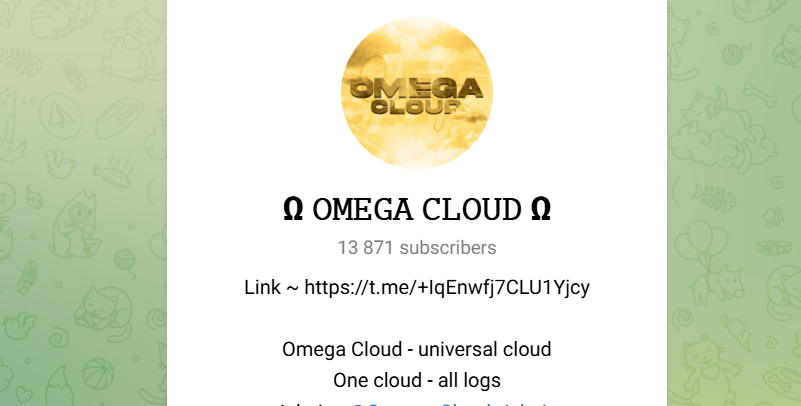
Omega Cloud
Brief overview
Omega Cloud focuses on bulk credential and session token distribution targeting SaaS platforms such as Salesforce, Okta, VPNs, and RDP environments. Its scope includes harvesting tokens, configuration files, and access credentials using malware like Raccoon Stealer.
The intent is to provide ransomware affiliates with scalable entry points into corporate systems.
Monetization model
Omega Cloud uses a high-volume pricing model, selling logs in bulk (e.g., 5,000 logs for $100). Profitability is driven by scale rather than precision, relying on statistical success rates where a portion of credentials remain valid.
Mitigation strategy
- Enforce short-lived session tokens with re-authentication every 4–8 hours
- Rotate credentials and session keys regularly
- Restrict long-lived VPN and RDP sessions
- Monitor token reuse across locations and devices
- Implement continuous authentication for SaaS access
4

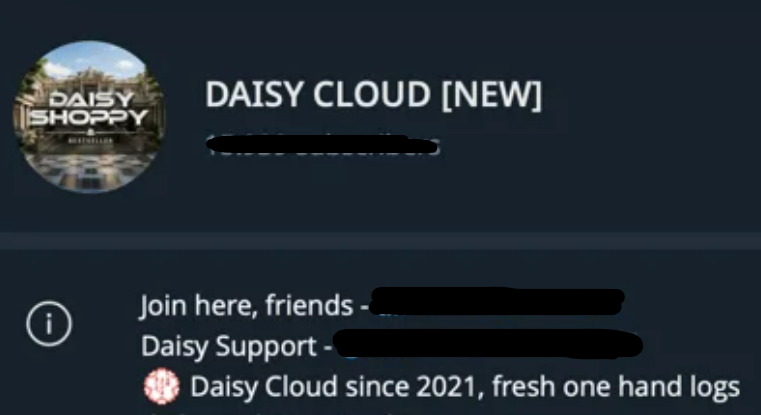
Daisy Cloud
Brief overview
Daisy Cloud is a daily log distribution service targeting banking users in the United States and Europe.
Its scope focuses on account takeover and financial fraud using phishing campaigns disguised as HR or finance communications, combined with malware like Valkyrie Stealer to extract sensitive browser data.
Monetization model
Daisy Cloud operates on a subscription-only model requiring cryptocurrency payments. There are no free samples, and all data is pre-validated against banking domains. This “high-fidelity” positioning increases resale value and exclusivity.
Mitigation strategy
- Automate credential reset workflows using threat intelligence feeds
- Integrate third-party CTI into identity security systems
- Monitor banking credential exposure in real time
- Enforce step-up authentication for financial transactions
- Apply anomaly detection for account changes and payments
5

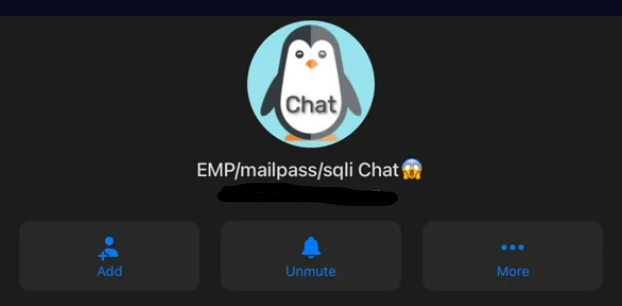
EMP Chat
Brief overview
EMP Chat is a reconnaissance hub for SQL injection vulnerabilities, email/password leaks, and early-stage breach data. Its scope focuses on collaboration between threat actors exchanging vulnerabilities and datasets before they are publicly exploited.
It acts as an early warning layer for larger cyberattacks.
Monetization model
EMP Chat uses a reputation-based system where users earn “rep points” for contributing high-value leaks or vulnerabilities. These points can be exchanged for private datasets or unreleased SQL dumps. Value is driven by exclusivity and early access rather than direct payments.
Mitigation strategy
- Implement External Attack Surface Management (EASM)
- Continuously scan for exposed applications and misconfigurations
- Detect and remediate SQL injection vulnerabilities
- Monitor underground channels for early breach indicators
- Reduce exposed web application attack surface
6

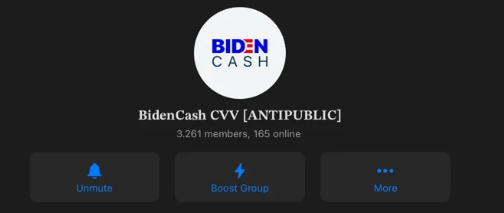
BidenCash (no longer live)
Brief overview
BidenCash operates as a large-scale global carding marketplace focused on the distribution and promotion of stolen payment card data and identity records (“Fullz”). Its scope spans both digital and physical fraud ecosystems, sourcing data from compromised e-commerce platforms, infostealer logs, and Magecart-style JavaScript skimmers embedded in checkout pages.
The platform plays a dual role as both a marketplace and a marketing engine within the cybercrime economy, actively driving demand for stolen financial data.
Monetization model
BidenCash uses a promotional leakage strategy, releasing large datasets (often over 1 million cards) for free to demonstrate legitimacy. Once trust is established, users are directed to paid access for fresher and higher-value BIN data.
Mitigation strategy
- Implement BIN-level blocking for high-risk card ranges frequently exposed in breaches
- Apply geo-based risk scoring to detect abnormal transaction locations
- Monitor card testing behavior, including repeated low-value authorization attempts
- Deploy advanced fraud detection models that analyze transaction velocity and anomalies
7


BriansClub
Brief overview
Brian’s Club is a long-established carding marketplace specializing in the sale of magnetic stripe data (“dumps”) used for physical card cloning. Its scope includes point-of-sale (POS) malware infections, ATM skimming operations, and coordinated social engineering campaigns targeting retail staff to gain system-level access. Unlike newer Telegram-native ecosystems, Brian’s Club represents a more traditional but still highly effective fraud infrastructure.
Its intent is to enable physical-world fraud by converting stolen payment data into cloned cards that can be used for in-store purchases or ATM withdrawals.
Monetization model
Brian’s Club operates on a structured escrow-based marketplace model designed to build trust between buyers and sellers. It offers replacement guarantees for invalid or “dead” cards, supported by automated checker systems that verify card usability before and after purchase.
This reliability encourages repeat transactions and positions the platform as a high-trust environment within the carding ecosystem.
Mitigation strategy
- Transition fully to EMV chip and contactless payment systems
- Disable magnetic stripe fallback across all terminals
- Monitor POS systems for malware, unauthorized access, or tampering
- Conduct regular physical inspections of payment terminals
- Implement network segmentation for retail payment environments
- Train retail staff to detect social engineering attempts
8

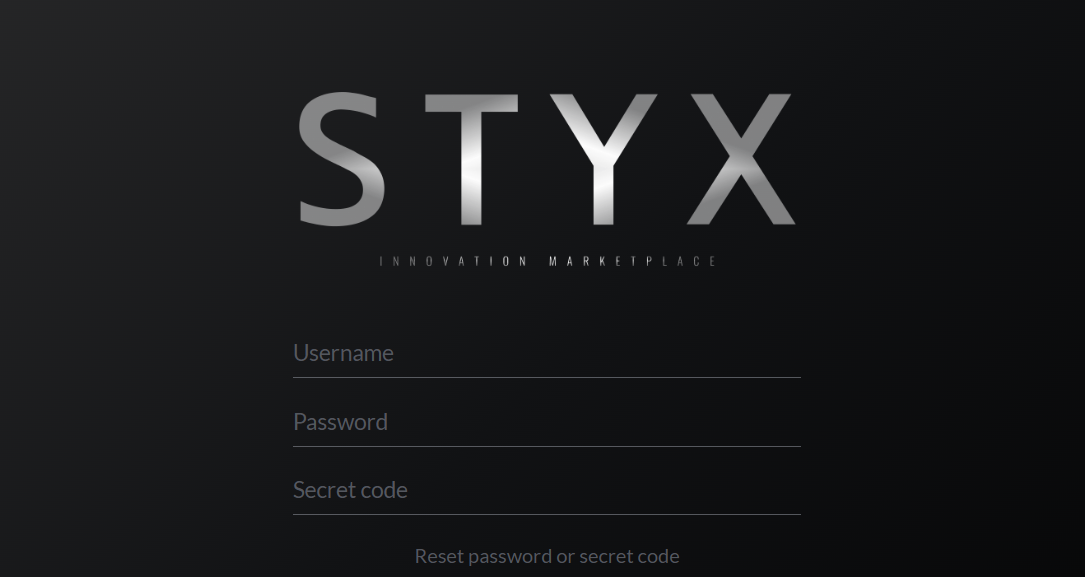
STYX Market
Brief overview
STYX Market is a specialized financial cybercrime platform focused on cash-out operations and real-time monetization of stolen credentials and session data. Its scope includes enabling attackers to convert compromised accounts, card data, and digital assets into liquid funds through coordinated fraud workflows. A key capability of STYX is its use of adversary-in-the-middle (AiTM) techniques, where attackers proxy live user sessions to capture authentication data and perform actions in real time.
The intent is immediate financial extraction, often occurring while the legitimate user session is still active, making detection more difficult.
Monetization model
STYX operates on a commission-based model, taking a percentage of successful cash-out transactions. Unlike static data marketplaces, revenue is tied directly to successful fraud execution.
This creates a performance-driven ecosystem where attackers are incentivized to act quickly on fresh data.
Mitigation strategy
- Block known AiTM infrastructure using threat intelligence feeds
- Detect real-time session hijacking through behavioral anomalies
- Monitor session token reuse across multiple devices and locations
- Enforce continuous authentication validation during active sessions
9

Log Sync
Brief overview
Log Sync operates as a real-time aggregation and distribution layer within the Telegram cybercrime ecosystem, focusing on the continuous ingestion and sharing of freshly compromised data. Its scope centers on syncing infostealer logs, session tokens, cookies, and credential datasets across multiple channels and operators, often within minutes of initial compromise.
Unlike static “cloud” dumps, Log Sync emphasizes speed and automation, enabling near real-time access to stolen data from malware such as RedLine, Raccoon, and Vidar.
Monetization model
Log Sync typically follows a subscription or access-based monetization model, where users pay for continuous, real-time feeds of synchronized logs rather than one-time datasets.
Pricing is often tiered based on speed, volume, and data quality, with premium tiers offering near-instant access to newly harvested credentials.
Mitigation strategy
- Implement real-time log monitoring and correlation across identity and access systems
- Reduce Mean Time to Detect (MTTD) through continuous security monitoring
- Automatically trigger credential resets when exposure is detected
- Enforce short session lifetimes to limit the usability of stolen tokens
10


Alien Logs
Brief overview
Alien Logs operates as a large-scale infostealer log distribution service within the Telegram ecosystem, focusing on the rapid aggregation and resale of credentials, cookies, and autofill data.
Its scope includes logs harvested from malware such as RedLine, Vidar, and Raccoon, with a strong emphasis on usability for account takeover and credential stuffing. The platform is widely used due to its structured filtering capabilities, allowing buyers to search logs by domain, country, or platform.
Monetization model
Alien Logs follows a subscription-based model where users pay for access to searchable log databases. Premium tiers provide advanced filtering, higher-quality logs, and faster updates.
Mitigation strategy
- Monitor for credential exposure across known log marketplaces
- Enforce passwordless authentication to reduce credential reuse risk
- Detect abnormal login attempts tied to known exposed datasets
- Apply adaptive authentication for high-risk accounts
» Discover how Telegram’s new data sharing rules affect cybercriminals
How KELA Supports You
KELA’s cyber threat intelligence platform continuously monitors more than 500 illicit sources, including Telegram channels, dark web forums, Discord servers, and credential dumps—to detect leaked credentials and active session tokens in real time. Its machine learning–driven Monitor module isolates organization-specific assets from large-scale logs and database leaks, cutting through the noise. Alerts are then prioritized using contextual risk signals such as executive account exposure and ransomware likelihood based on EPSS scoring.
Overall, this approach allows you to identify, validate, and respond to threats across your attack surface with greater speed and accuracy.
» Ready to get started? Contact us to learn more
FAQs
What are Telegram log and carding channels?
Telegram log and carding channels are cybercrime hubs where stolen credentials, session tokens, cookies, and financial data are shared or sold. These channels act as distribution points for data collected through infostealer malware, phishing campaigns, and compromised systems, enabling attackers to quickly access and exploit exposed accounts.
Why are these channels a risk to organizations?
These channels reduce the time between data theft and exploitation to minutes. Once credentials or session tokens are shared, attackers can bypass traditional security controls and gain immediate access to corporate systems, increasing the risk of account takeover, data breaches, and ransomware attacks.
How do attackers get the data shared in these channels?
Most data comes from infostealer malware like RedLine, Vidar, or Raccoon, as well as phishing campaigns and compromised websites. These tools extract browser data, saved passwords, cookies, and session tokens from infected devices, which are then uploaded and distributed through Telegram-based ecosystems.
What is the difference between log channels and carding channels?
Log channels focus on distributing credentials, cookies, and session data used for account access, while carding channels specialize in stolen payment card data and identity information (“Fullz”). Both support different stages of cybercrime, but often overlap in larger fraud operations.