
Webinar
The TeamPCP arrests, from the inside
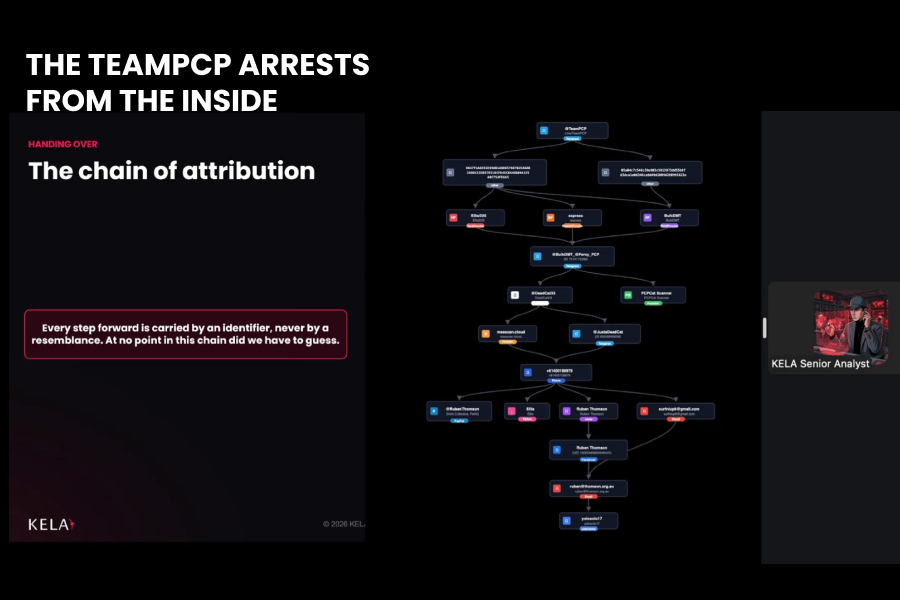
The full story of how KELA supported law enforcement: Trivy, Checkmarx KICS and LiteLLM fell in five days, the cascade ran for five more months, and in August two men were charged in Perth.
Five months after the March waves, the cascade was still producing victims across npm, PyPI and GitHub Actions. On 26 August 2026, the Australian Federal Police charged two men in Perth, working with the FBI and Western Australia Police Force, after receiving information from cyber threat assessment companies. This session walks the full arc, and what it changes about how you model trust in your own pipelines.

Key Topics:
- How the cascade actually worked. Wave by wave, from a service account compromise to 76 of 77 poisoned version tags to malicious releases on PyPI, and why the credential rather than the CVE was the payload.
- Why an incomplete rotation was the whole story. A February 2026 breach was patched but not fully rotated. That single gap is what made March possible, and it is the most common version of this failure.
- What “still running” looks like in practice. The compromises that landed after the March reporting cycle closed, and why patching a package does not end exposure when access chains through stolen tokens.
- A concrete verification checklist. The specific package versions, action tags and exposure windows to check, and what to treat as compromised regardless of whether the tool was invoked.
- How the trust boundary should be redrawn. A security tool sits inside the trust boundary of every pipeline it runs in. Very few organizations model it that way, and this is the case study for changing that.
Watch now!
The Complete Guide to Combating Ransomware
Navigating the Evolving Landscape of Ransomware and Cyber Threats

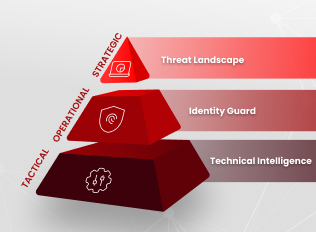
KELA Ransomware Protection Suite
KELA delivers a comprehensive, intelligence-driven defense, designed to neutralize ransomware threats before they can impact your business.

Inside the Infostealer Epidemic – Exposing the Risks to Corporate Security
Read the full report to learn more how stolen credentials are fueling ransomware, fraud, and modern cybercrime.

Webianr: The TeamPCP arrests, from the inside