The Role of Risk Management in the Financial Services Industry
Risk management in the financial services industry means identifying, assessing, and mitigating financial, operational, cyber, reputational, and regulatory risk before it escalates. This guide covers the risks financial institutions carry, what Basel III, DORA, FFIEC guidance, and SOC 2 each ask for, and how to balance proactive indicators against reactive playbooks.




Published September 4, 2026
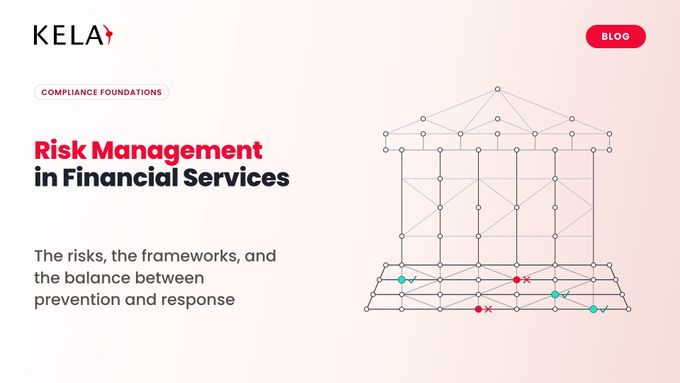
Effective risk management in the financial services industry is essential for safeguarding assets, maintaining customer trust, and ensuring long-term stability. Financial institutions operate in a complex environment where financial, operational, cyber, reputational, and regulatory risks are constantly evolving and often interconnected. The rapid adoption of digital technologies, fintech partnerships, and cloud services has introduced new vulnerabilities, making risk oversight more critical than ever.
In this blog, we will explore the key risks financial institutions face, examine sector-specific strategies, and share practical tips for balancing proactive and reactive approaches to risk.
» Ensure your risk management is up to standard with KELA
Understanding Risk in Financial Institutions
Managing risk is critical for financial institutions, not just to stay compliant but to ensure long-term stability and resilience. Risks in banking are interconnected, and a failure in one area can trigger issues across operations, finances, reputation, and regulatory standing.
Effective risk management means continuously identifying, assessing, and mitigating threats before they escalate, allowing institutions to protect assets, maintain customer trust, and navigate an unpredictable market with confidence.
» Make sure you understand how threat actors breach and exploit your data
Primary Risks Financial Institutions Must Monitor
- Financial risk: This includes credit risk, where borrowers or counterparties fail to meet their obligations, and liquidity risk, which arises when an institution cannot meet its short-term cash needs. Economic downturns or sudden market shocks can strain liquidity, forcing banks to sell assets at a loss and threatening overall solvency.
- Operational risk: Failures in internal systems, processes, or human error can halt critical operations, disrupt transactions, or lead to financial penalties. Operational lapses also often lead to regulatory scrutiny, which can harm both the institution’s finances and public confidence.
- Cyber risk: The increasing reliance on digital systems exposes institutions to cyberattacks such as ransomware, phishing, and data breaches. Such incidents can paralyze operations, incur significant financial losses, trigger legal consequences, and damage reputation.
- Reputational risk: Trust is the foundation of financial institutions. Loss of reputation can magnify the impact of any other risk. Public scandals, system failures, or highly visible cyber incidents can drive deposit withdrawals, push stock prices down, and prompt investors to flee.
- Regulatory and compliance risk: Financial institutions must comply with constantly evolving laws, regulations, and industry standards. Falling short can result in penalties, fines, or operational restrictions. Ensuring compliance is therefore not just a legal requirement but a strategic necessity.
» Talk to KELA and take the first step toward building operational resilience and ensuring regulatory compliance
How Regulatory Frameworks Shape Risk Management
Regulations such as Basel III, FFIEC guidelines, DORA, and SOC 2 are transforming how financial institutions manage risk and safeguard data.
- Basel III strengthens financial resilience by setting a minimum Common Equity Tier 1 ratio of 4.5% of risk-weighted assets before buffers, rising to 7.0% once the capital conservation buffer is included and higher again for global systemically important banks, alongside a liquidity coverage ratio of 100%, fully phased in since 2019.
- FFIEC guidelines emphasize cybersecurity maturity, mandating robust defenses and immediate incident response plans.
- In Europe, DORA has applied to financial entities since January 2025, requiring ongoing ICT risk management, major incident reporting, and regular resilience testing, and extending oversight to their ICT third-party providers to reduce supply chain vulnerabilities.
- SOC 2 extends these expectations to cloud and fintech service providers, ensuring data integrity, privacy, and operational reliability.
Together, these frameworks move compliance beyond a checkbox exercise, integrating financial, cyber, and operational oversight into a single governance model that drives measurable resilience.
» Learn more: The power of KELA's cyber threat intelligence platform
Critical Branches of Risk Management
For financial institutions specifically, success hinges on mastering specific branches of risk management.
- Credit risk management: This is essential for solvency. It handles potential defaults from borrowers and counterparties, directly supporting strong Basel III capital ratios. Its value lies in safeguarding deposits and maintaining financial stability.
- Cybersecurity risk management: This is crucial for modern operations. It protects digital systems from attacks and breaches. Guided by FFIEC guidelines, its key value is ensuring operational continuity and preventing massive financial and reputational damage by keeping payment systems running and customer data secure.
- Third-party and vendor risk management: with increased reliance on external providers, this is vital. It assesses and mitigates risks from partners. Mandated by rules like DORA, its value is enforcing consistent security and compliance across the supply chain, ensuring a vendor's failure doesn't compromise the institution's integrity.
» Confused? Here's our guide to navigating third-party cyber threats
The Impact of Risk Management Across the Financial Industry
Retail Banking
Within retail banking, the most vital risk management areas are cybersecurity risk and fraud risk.
- Cybersecurity risk management protects customer accounts and banking systems by continuously updating defenses against phishing, malware, and data breaches. Without robust protection, a major breach can instantly erode trust.
- Fraud risk management prevents financial losses from activities like card skimming, identity theft, and money laundering. Tools such as behavioral biometrics and real-time transaction monitoring detect unusual patterns, directly safeguarding customers.
These practices directly influence consumer confidence and the bank’s reputation. Successfully defending client funds and data strengthens trust, while high-profile failures can lead to customer attrition and reputational damage.
» Here's everything you need to know about external risk management
Investment & Asset Management
In investment and asset management, three risk controls are most effective against market volatility and credit exposure:
- Portfolio diversification spreads investments across asset classes such as stocks, bonds, and real estate. This dampens overall portfolio swings, smoothing performance and boosting investor confidence, especially during market downturns.
- Credit risk analysis rigorously vets bond issuers or borrowers, using credit ratings to assess default probability. This protects returns, ensures regulatory compliance, and reduces catastrophic losses from defaults.
- Liquidity risk management maintains sufficient cash or highly tradable assets to meet redemptions without forced fire sales. Adequate liquidity stabilizes performance, satisfies regulatory requirements, and prevents panic selling during crises.
Payment Processors & Fintech
For payment processors and fintech innovators, two areas of risk management are absolutely critical for growth and survival.
- Cybersecurity and fraud risk: This is number one. Since these firms handle money digitally, they must constantly manage risks like data breaches, account takeovers, and transaction fraud. Strong controls here ensure secure, uninterrupted transactions. Compliance with standards like Payment Card Industry Data Security Standard (PCI DSS) builds the operational resilience needed to keep systems running 24/7.
- Regulatory and compliance risk: Fintech operates in a complex legal space. They must manage compliance with rules like Know Your Customer (KYC) and Anti-Money Laundering (AML) laws. Successfully managing this risk avoids crippling fines and legal action. Demonstrating strict compliance is vital for attracting bank partners and investors, which is key to securing market growth and scaling the business.
Insurance & Underwriting
In insurance, predictive modeling and diversification are the most effective risk management tools.
- Predictive modeling uses AI and data to forecast claims likelihood and cost, allowing precise pricing that covers expected payouts and protects long-term solvency.
- Diversification spreads risk across geographies, industries, and policy types, preventing a single catastrophic event from causing financial ruin. This stabilizes pricing, improves regulatory standing, and strengthens overall financial health.
» Did you know? Cybercriminals now exploit generative AI
Treasury & Liquidity Management
In treasury functions, liquidity risk management and interest rate risk management are essential for financial stability.
- Liquidity risk management ensures institutions meet short- and long-term cash obligations without harming their financial position. Tools like the Liquidity Coverage Ratio (LCR ≥100% under Basel III) and holding high-quality liquid assets (HQLA) stabilize cash flow and enable crisis preparedness.
- Interest rate risk management measures and mitigates adverse impacts of rate changes on earnings and capital. Techniques like duration gap analysis help adjust funding strategies, protecting net interest income and capital adequacy while guiding the shift between short- and long-term funding to reduce exposure.
Third-Party and Vendor Risk Management
When overseeing vendor networks and outsourcing arrangements, the most critical risk management disciplines are Third-Party Risk Management (TPRM) and Information Security Risk Management.
- Third-Party Risk Management (TPRM) is the primary defense against vendor disruptions. It involves full-lifecycle oversight (from initial due diligence to continuous monitoring), assessing financial health, technical capabilities, and disaster recovery plans.
- Information security risk management focuses on minimizing data breach risks inherent in outsourcing. Vendors must meet the same security standards as the institution, often through SOC 2 or ISO 27001 certification. This discipline protects compliance outcomes and customer assurance by enforcing strict controls and contractual terms.
» Learn more: Why Third-Party risk in healthcare demands immediate attention

How KELA Supports You
KELA gives you real-time visibility, ongoing monitoring, and practical intelligence to keep third-party security under control.
Enterprise Governance and Compliance: Strengthening Oversight and Accountability
Within enterprise governance, Enterprise Risk Management (ERM) and Compliance Risk Management are the most influential disciplines for improving decision-making, audit performance, and organizational accountability.
- Enterprise Risk Management (ERM) takes a holistic view of all major risks (financial, operational, and strategic) across the organization. By scoring risks for impact and likelihood, ERM prevents siloed decisions and enhances resilience. For example, ERM ensures that a new product launch accounts for potential supply chain risks, avoiding operational setbacks.
- Compliance risk management ensures adherence to laws, regulations, and internal policies. Effective compliance risk management clarifies responsibilities across departments, improves audit performance, and enhances regulatory transparency. Proper management prevents costly penalties, such as the billions in fines related to Anti-Money Laundering (AML) breaches.
» Make sure you understand the difference between vulnerability, threat, and risk to strengthen your cybersecurity strategy
Striking the Right Balance Between Proactive and Reactive Risk Management
A financial institution’s resilience depends on blending proactive measures that prevent crises with reactive plans that manage them effectively when they occur. This balance ensures operational strength while staying aligned with regulatory requirements. Here are three practical tips:
Proactive: Embed Risk Indicators in Daily Operations
Use Key Risk Indicators (KRIs) such as unusual employee login times, failed security patches, or sudden spikes in customer complaints. Monitoring these signals in real time allows the institution to intervene early, fixing minor issues before they escalate into major operational failures or regulatory violations.
This proactive approach reinforces overall resilience and reduces the likelihood of costly disruptions.
Reactive: Invest in Playbooks and War-Gaming
Develop detailed incident response playbooks for scenarios like cloud outages, cyberattacks, or liquidity runs. Regularly test these plans through scenario analysis and war-gaming exercises.
This ensures teams can react quickly and effectively during crises, containing damage efficiently and demonstrating to regulators that response processes are practiced and reliable.
Balance: Automate Compliance and Auditing
Leverage technology to monitor regulatory compliance continuously, rather than relying on manual audits. Automated systems track adherence to standards like Basel III or GDPR and generate real-time reports.
This approach prevents fines proactively while providing reactive evidence that the institution’s controls were robust and effective during any incident.
» Read more: Key cyber threats facing the financial sector

Enhance Financial Threat Readiness
Monitor emerging risks targeting financial institutions.
Identify vulnerabilities early with continuous intelligence.
Respond confidently with clear, actionable insights.
How KELA Cyber Can Help Your Organization
When selecting risk-management or threat-intelligence platforms, financial institutions need solutions that deliver relevant, actionable, and easily integrated intelligence. At KELA Cyber, we specialize in gathering insights directly from the deep and dark web, the main marketplace for stolen financial data, compromised bank credentials, and network access listings.
Our platform provides highly targeted alerts that feed seamlessly into your fraud prevention and incident response workflows. For example, if stolen employee logins appear on a private forum, KELA can alert your team immediately, enabling you to act before attackers gain access.
With KELA, your risk management strategy is not just reactive; it is proactive, precise, and tailored to the financial sector.
»Start for free and see what is already exposed: compromised credentials and network access listings surfaced from cybercrime sources, mapped to your organization.
FAQs
What is risk management in the financial services industry?
Risk management in the financial services industry involves identifying, assessing, and mitigating financial, operational, cyber, reputational, and regulatory risks to protect assets and ensure long-term stability.
Why is risk management critical for banks and financial institutions?
It safeguards customer funds, prevents operational disruptions, supports compliance with regulations, and maintains public trust, which is essential for financial stability and business continuity.
What are the key regulatory frameworks for financial risk management?
Frameworks like Basel III, FFIEC guidelines, DORA, and SOC 2 set minimum expectations for capital adequacy, cybersecurity, third-party oversight, and operational controls, guiding institutions toward resilience.
How can proactive and reactive risk management strategies work together?
Proactive strategies, like monitoring key risk indicators, prevent issues, while reactive strategies, like incident response playbooks, manage crises efficiently. Together, they ensure resilience and regulatory readiness.